
Pakistan Travel Guide for International Visitors
There are countries you visit. Then there are countries that visit you back — that reach into your assumptions and rearrange them permanently. Pakistan is the latter.
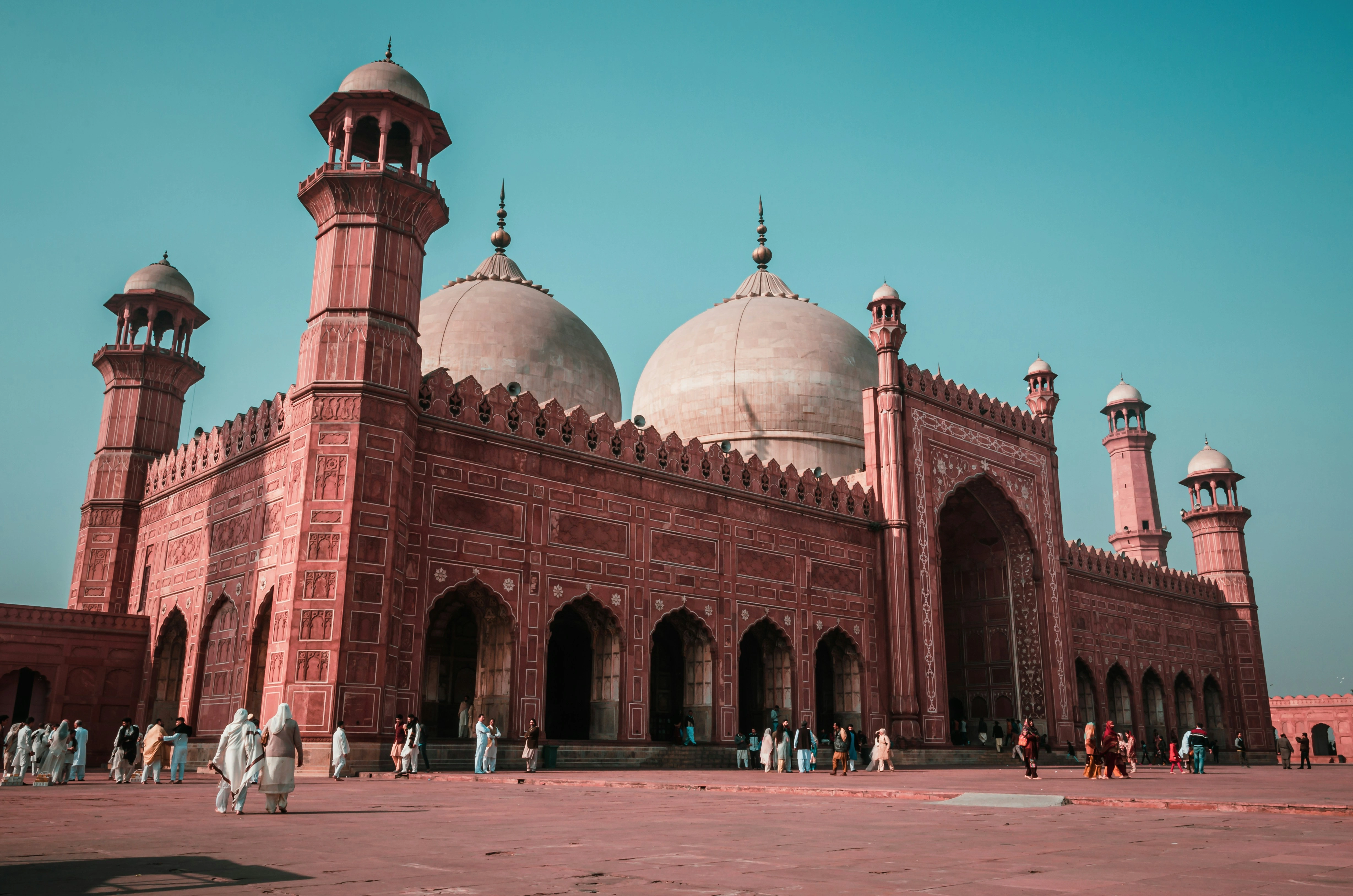
The Quick Guide (At a Glance)
- 01/ The growth story is real: Pakistan's international tourism receipts grew faster than almost any country measured in the past year — second only to Serbia — even though total visitor numbers remain modest by global standards (under a million annual international arrivals by most counts, still recovering toward pre-2020 levels).
- 02/ It's not one security picture, it's two Western governments currently advise against most or all travel to Balochistan and Khyber Pakhtunkhwa, while the northern tourist corridor — Hunza, Skardu, Gilgit-Baltistan, the Karakoram Highway — continues to see record visitor numbers with a meaningfully different risk profile.
- 03/ The wildlife is a genuine differentiator: Pakistan's mountains hold one of the world's last snow leopard strongholds, alongside markhor, Himalayan brown bears, and — far from the mountains — one of the rarest freshwater dolphins on the planet.
- 04/ The visa rules changed recently:As of early 2026, most Western travelers can no longer get a visa on arrival — an eVisa applied for in advance is now required, and approval is taking longer than it used to.
Mention Pakistan to most people outside the region and you'll get one of two reactions: genuine confusion about why you'd go, or — increasingly — "wait, isn't that supposed to be incredible right now?" Both reactions are about a decade out of date in different directions. Pakistan isn't a single story. It's the Karakoram and the Arabian Sea, qawwali nights and glacier treks, a tourism sector growing faster than almost anywhere else on earth and a State Department advisory that still says "reconsider travel." Both of those things are true at once, and any guide that pretends otherwise — in either direction — isn't being straight with you. This one is trying to be.
Why Pakistan Is the World's Most Misunderstood Travel Destination
The gap between Pakistan's reputation and its on-the-ground reality is unusually wide, and it
cuts in a specific direction: most outside perception is frozen somewhere around 2009–2014,
while the country's tourism sector has spent the years since quietly rebuilding. Foreign tourist
arrivals jumped by more than 100% in 2023 alone according to Pakistan's tourism ministry,
recovering most of the way back to pre-pandemic levels, and recent international rankings place
Pakistan among the very fastest-growing destinations worldwide by tourism receipts.
None of that means Pakistan has become a mainstream beach-and-resort destination overnight — it
hasn't, and probably won't for years. What it does mean is that "is Pakistan worth visiting" has
a more interesting answer than either the breathless travel-vlogger version or the nightly-news
version: yes, for a specific kind of traveler, in specific parts of the country, with realistic
expectations about infrastructure and a clear-eyed read on where the actual risk sits.
"To travel is to discover that everyone is wrong about other countries"
— Aldous Huxley
Pakistan's Five Landscapes, From Snowy peaks (with snow leopards) to the Arabian Sea
Few countries this size pack in this much geographic range. The north is the headline act —
Hunza, Skardu, and the Karakoram Highway running past some of the highest mountains on earth,
including K2 — and it's also home to one of the world's last meaningful snow leopard
populations. For years the estimate for Pakistan's snow leopards sat at a wide, mostly-guessed
range of 200 to 420 animals; a decade-long nationwide camera-trap and genetic survey completed
in 2025 narrowed that to a more precise (and lower) estimate of roughly 155 to 167 individuals
concentrated in the Karakoram-Pamir region, alongside markhor — Pakistan's national animal —
and, in the high-altitude plains of Deosai National Park, one of the densest known populations
of Himalayan brown bears.
Beyond the mountains, the geography shifts entirely. The Punjab plains hold Lahore's Mughal
architecture and most of the country's agriculture; the Thar and Cholistan deserts in the south
offer a completely different, little-visited landscape; and the Arabian Sea coast around Karachi
and Gwadar includes mangrove creeks that are home to the endangered Indus river dolphin, found
almost nowhere else on the planet. It's a genuinely strange thing about Pakistan that a single
domestic flight can take you from glacier to desert to coastline — most "best places to visit in
Pakistan" lists undersell just how different those five landscapes are from each other.
The Hospitality, Cuisine and Etiquette That Surprise First-Time Visitors
The single most consistent thing foreign visitors report about Pakistan isn't a place — it's the
hospitality, and it tends to catch people off guard by how unconditional it feels. In the north,
Ismaili communities in Hunza and Gilgit-Baltistan are known for an open warmth toward outsiders
that contrasts with the more conservative reputation the rest of the country carries. In Pashtun
areas, Pashtunwali's code of hospitality means a guest is genuinely a guest, full stop. In
cities, it usually shows up smaller: a shopkeeper insisting on a cup of chai before any
transaction happens, strangers redirecting their own day to make sure you find the right bus.
Food is where that hospitality gets concrete. Lahore's breakfast culture revolves around nihari
and paratha; Karachi does seafood better than almost anywhere else in the country, owing to its
coastal location; the north has its own distinct cuisine built around apricots, dried fruit, and
Balti-style dishes that taste closer to Central Asian food than the curries most foreigners
expect. And yes, Pakistani food can be genuinely spicy, but it's not uniformly so — restaurant
staff will almost always adjust heat levels if you ask, and the rule of thumb is that home-style
and street food tend to run hotter than what's served in hotels and tourist-facing restaurants.
Culturally, a few things are worth knowing before you land rather than figuring out in the
moment. Pakistan is a dry country for the most part — alcohol is illegal for Muslim citizens and
tightly restricted even for foreign tourists, available legally only in a small number of
licensed hotel bars and clubs in major cities, so don't plan a trip around it. Dress modestly,
particularly for women and especially at religious sites and in rural areas — loose, covering
clothing is both respectful and genuinely more comfortable in the climate. Always ask before
photographing people, particularly women; it's a basic courtesy that's also taken seriously
here. And during Ramadan, expect reduced restaurant hours during the day and a noticeably
different rhythm to public life, which is worth planning around rather than working against.
Where Pakistan Is Safe for Tourists in 2026
This is the section that actually matters, so it gets a straight answer rather than a reassuring
one. As of mid-2026, the US State Department rates Pakistan overall at Level 3, "Reconsider
Travel," citing armed conflict, terrorism, crime, and kidnapping risk — and rates Balochistan
province and Khyber Pakhtunkhwa (including the former tribal areas), along with the immediate
vicinity of the Line of Control in Kashmir, at Level 4, "Do Not Travel." In March 2026, the
State Department also ordered non-emergency staff and family members out of its Lahore and
Karachi consulates over safety concerns, while leaving the status of the Islamabad embassy
unchanged — worth knowing, even though it reflects government-personnel risk thresholds rather
than a blanket statement about those cities for tourists. The UK's FCDO advisory follows a
similar shape: it advises against all travel to most of KP and a strip along the Afghan border,
and against all but essential travel to other parts of the country.
What these advisories consistently do not flag as a no-go zone is the northern tourist corridor
— Gilgit-Baltistan, Hunza, Skardu, and the Karakoram Highway — which has continued to draw
record numbers of foreign trekkers and climbers through this same period without the kind of
incidents that show up in the regions under "do not travel" status. That's the real
two-Pakistans split: a handful of specific, named, officially flagged areas near the Afghan
border and in KP and Balochistan, and a separate, actively-promoted tourist circuit in the north
that operates on a different risk basis entirely. The honest version of "is Pakistan safe for
tourists in 2026" is that it depends almost entirely on which Pakistan you're talking about —
and the responsible move, regardless of which one you're visiting, is to check your home
country's current advisory before booking (not a five-year-old blog post), register with your
embassy if that option exists for your nationality, and travel with an operator who tracks
conditions in real time rather than assuming nothing has changed since last season.
Visa, SIM Cards and Getting Around as a Foreigner in 2026
If you've read anywhere that Pakistan offers broad visa-on-arrival access, that information is
now outdated for most Western travelers. In early 2026, Pakistan suspended visa-on-arrival and
visa-prior-to-arrival processing for 126 nationalities, including the US, UK, Canada, Australia,
and the EU; travelers from these countries must now apply for an eVisa online in advance, with
processing currently running longer than it used to — budget at least two to three weeks rather
than assuming a fast turnaround. GCC nationals are generally still exempt from this change.
Because this kind of policy has shifted before and could shift again, check Pakistan's official
visa portal directly before you finalize flights, rather than relying on older blog guides
(including, to be fair, parts of this one a year from now).
Once you're in the country, getting a local SIM is straightforward but bureaucratic: bring your
passport and visa to an official Jazz, Zong, Telenor, or Ufone outlet (airport kiosks or
city-center franchise stores are more reliable than street vendors), complete a biometric scan,
and you'll typically be online within half an hour. Jazz has the strongest rural and mountain
coverage if you're heading to Hunza or Skardu. For getting around, domestic flights connect
Islamabad, Lahore, Karachi, and Gilgit-Baltistan's main towns and are worth the cost given how
mountainous and slow overland routes in the north can be; the Karakoram Highway itself is a feat
of engineering but a genuinely long, winding drive, so factor real time into any northern
itinerary rather than treating distances on a map at face value.
Frequently Asked Questions
It depends heavily on where. Western governments currently advise against travel to Balochistan, Khyber Pakhtunkhwa, and areas near the Afghan border and Line of Control, while the northern tourist corridor — Hunza, Skardu, and Gilgit-Baltistan — has continued to see record visitor numbers without the incidents driving those specific advisories. Check your home country's current advisory before booking, and don't rely on outdated articles, including older ones about this exact topic.
Yes, and the process recently changed. As of early 2026, most Western nationalities (including the US, UK, Canada, Australia, and EU countries) lost access to visa-on-arrival and must apply for an eVisa in advance, with processing taking longer than before. Apply well ahead of your travel dates through Pakistan's official visa portal rather than a third-party site.
It can be, but it's not uniform — home-style and street food tend to run hotter than what's served in hotels and restaurants catering to tourists, and most places will adjust spice levels if you ask. Regional cuisine also varies a lot: northern dishes built around apricots and dried fruit are generally milder than Lahori or Karachi street food.
Alcohol is illegal for Muslim citizens and tightly restricted nationally, but foreign tourists can legally drink in a small number of licensed bars, generally inside major international hotels in big cities. It's not part of the wider culture, so it's not something to plan a trip around.
It depends on which region. The northern mountains (Hunza, Skardu, Karakoram Highway) are best from late spring through early autumn, roughly May to October, when high passes are clear. Lowland cities like Lahore, Multan, and Karachi are far more comfortable from October through March, since summer heat in the plains is intense and prime mountain season doesn't overlap with it.