
Why Pakistan Is the Last Great Destination for the Serious Traveler
There are countries you visit. Then there are countries that visit you back — that reach into your assumptions and rearrange them permanently. Pakistan is the latter.
The Quick Guide (At a Glance)
- 01/ Five Mountain Ranges: Pakistan sits at the convergence of the Karakoram, Himalayas, and Hindu Kush — home to five of the world's fourteen 8,000m peaks including K2.
- 02/ A Civilisation 5,000 Years Deep: From Mohenjo-daro to Mughal Lahore, Pakistan holds six UNESCO World Heritage Sites and the ruins of one of humanity's oldest urban civilisations.
- 03/ Best Season to Travel: May–June and September–October for the north. October–February for Lahore, Multan, and the historic south.
- 04/ Visa:Pakistan's eVisa processes in 5–7 working days online. Most Western passport holders qualify. Third Domain handles all permit logistics for restricted zones.
For decades, Pakistan existed as a rumour among serious travelers — whispered about in mountaineering lodges in Chamonix, passed between pages of dog-eared expedition journals. It was the destination that every seasoned explorer quietly acknowledged as extraordinary, and that almost no one had actually seen. That is changing, and rapidly. In 2025, Pakistan crossed one million international tourist arrivals for the first time. The world has begun to notice what those early adventurers always knew.
The Geography That No Other Country Can Match
The numbers alone are staggering. Pakistan is home to five of the world's fourteen peaks above
8,000 metres — K2, Nanga Parbat, Gasherbrum I and II, and Broad Peak. It contains 7,253
glaciers, more glacial mass than any country outside the polar regions. Three of the planet's
greatest mountain ranges — the Karakoram, the Himalayas, and the Hindu Kush — converge here in a
single, spectacular knot of rock and ice.
But the north is only one register of Pakistan's geography. Travel south and the terrain shifts
entirely: to the Thar Desert's sculpted dunes, to the surreal lunar plains of Deosai — the
world's second-highest plateau — to the warm Arabian Sea coast where the ruins of a Bronze Age
port city still face the water. Few countries on earth contain this degree of geographical range
within a single border.
"To travel is to discover that everyone is wrong about other countries"
— Aldous Huxley
A Civilisation the World Has Largely Forgotten
The history of this territory does not begin with the Mughals, though their legacy alone — the
Badshahi Mosque, Lahore Fort, the Shalimar Gardens — would justify a journey. It begins roughly
5,000 years ago, at Mohenjo-daro and Harappa, cities of the Indus Valley Civilisation that were
practicing advanced urban planning — covered drainage, standardised weights, grid streets —
while the rest of the ancient world was still learning agriculture.
Between those two poles stretches an almost overwhelming sequence of civilisations: Gandharan
Buddhist kingdoms, Macedonian Greek colonies, Central Asian Mughal courts, British imperial
infrastructure, and the living, breathing Sufi traditions that still fill the shrines of Lahore
and Multan with devotional music on Thursday nights. For the traveler who understands that
history is not a backdrop but the entire point — Pakistan is almost incomprehensibly rich.
The North: Where the Serious Traveler Goes
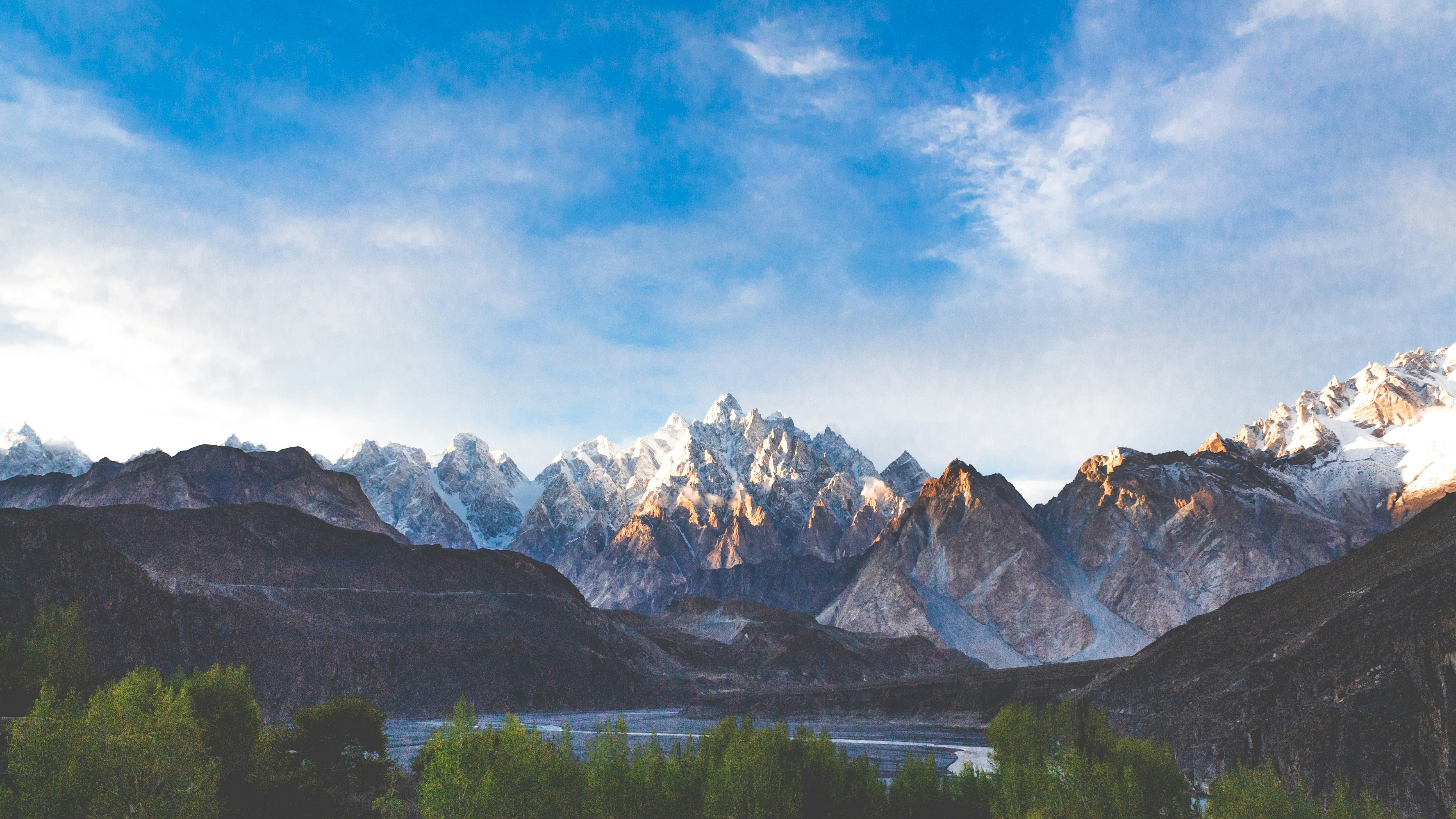
Gilgit-Baltistan is the axis around which Pakistan's adventure reputation turns. The Hunza
Valley alone — with its terraced apricot orchards, ancient Baltit and Altit Forts, and the
impossibly blue surface of Attabad Lake — functions as a destination unto itself. Skardu serves
as the staging ground for K2 Base Camp and access to Deosai National Park, where the plateau's
vast, treeless expanse is home to the Himalayan brown bear and an unobstructed sky that
photographers travel across continents to photograph.
The Karakoram Highway — carved through the mountains above the Indus River — is considered one
of the great road journeys of the world. For the discerning traveler, Third Domain designs
private drives along this route in characterful overland vehicles, stopping at Passu Cones, the
Shimshal Valley, and ancient caravanserai that once served the original Silk Road.
Explore Third Domain Curated Itinerary Pathways
The Northern Frontier (7 Days)
For mountaineers, high-altitude trekkers, and landscape photographers. The most concentrated collection of dramatic scenery on earth, accessed in complete privacy and comfort.
A curated lodge in Hunza with direct Rakaposhi views — managed exclusively for Third Domain guests during peak season.
A private jeep traverse of the Karakoram Highway with a dedicated naturalist guide, ending at K2 Base Camp approach trail.
Frequently Asked Questions
Yes, All major tourist destinations including Hunza, Skardu, Islamabad, and Lahore have strong safety records for international visitors. Pakistan recorded over one million international tourist arrivals in 2025, with a 121% surge in visitors to Gilgit-Baltistan alone. Third Domain's operational model — private vehicles, vetted accommodations, local specialist guides — removes the variables that independent travel cannot account for.
Most Western passport holders — including citizens of the US, UK, EU, Canada, and Australia — can apply for Pakistan's eVisa online, with processing typically taking 5–7 working days. Certain restricted trekking zones and high-altitude areas (including approaches to K2 and Nanga Parbat) require additional permits. Third Domain handles all permit logistics, zone clearances, and documentation as part of every itinerary.
The answer depends entirely on where you want to go. The northern valleys and high-altitude zones are at their peak between May and early October, when passes are open and the light is extraordinary. The cultural south — Lahore, Multan, Mohenjo-daro — is best experienced between October and February, when temperatures are cool enough for unhurried exploration of outdoor archaeological sites. Third Domain designs itineraries that account for both, often combining the north and south in a single journey across the seasons.
Scale and solitude, primarily. Nepal's Everest Base Camp trail receives tens of thousands of trekkers each season. The approaches to K2, which is a harder, more technically demanding mountain, see a fraction of that number. Nearly all of Gilgit-Baltistan's secondary valleys — Shimshal, Hushe, Chapursan — remain entirely uncommercialized. Pakistan offers a version of high-altitude adventure that the rest of the world's mountain destinations lost twenty years ago: genuine remoteness, genuine silence, and the sensation of being somewhere almost no one else has been.