
Tattu Village to Fairy Meadows: Trek Distance, Time and Complete Trail Guide
The jeep drops you at Tattu Village and drives away. From here, it's on foot — no roads, no shortcuts, just a 5–5.5 km forest trail climbing steadily until Nanga Parbat fills the sky ahead of you. Here's exactly what that trail involves.
The Quick Guide (At a Glance)
- 01/ Distance: 5 to 5.5 km (approximately 3.4 miles) from Tattu Village to Fairy Meadows
- 02/ Elevation gain: roughly 600–700 metres, climbing from around 2,600 m at Tattu to 3,300 m at the meadow
- 03/ Time: 2 to 4 hours depending on fitness, acclimatisation, and how much you're carrying
- 04/ Difficulty: Moderate — no technical terrain, but the altitude gain makes it feel harder than the distance suggests
The Distance Explained: Why 5 km Feels Different at 2,600 Metres
The trail from Tattu Village to Fairy Meadows is about 5.5 km long, with an
elevation gain of roughly 600 metres. Those numbers look modest on paper — and on a
flat trail at sea level, they would be. What changes the calculation here is altitude. What really gets you is the altitude — it's a steady incline and what throws
many hikers for a loop is how breathless and tired they get hiking at elevation.
That's worth being honest about before you plan this around your overall fitness level from
home. Fit travelers who've been at altitude for a few days typically cruise this in two to two
and a half hours. People who've come straight from Islamabad or Gilgit without an
acclimatisation stop — and who are carrying a full pack — tend to take closer to three to four
hours with rest breaks along the way. Neither pace is wrong. The trail rewards taking it slowly.
or context on where this fits into the broader journey: this is the final leg of a
multi-stage route from Raikot Bridge. Our complete Fairy Meadows
guide covers the full picture — jeep logistics, costs, what to expect at the meadow
itself, and the onward day hike toward Nanga Parbat Base Camp — so this post focuses
specifically on what happens once you step out of the jeep at Tattu.
"To travel is to discover that everyone is wrong about other countries"
— Aldous Huxley
The Trail Section by Section
The trail doesn't have formally named sections, but most people who've walked it describe it as falling into three fairly distinct phases.
Phase 1 — Tattu Village to the first tea stalls (roughly 1.5–2 km)
The trail starts from the upper edge of Tattu Village and immediately begins climbing. The first section starts from Tattu Village with a gentle incline, pine-scented air and occasional shade. Most of the path here is wide and stable. This early stretch is also the driest and most exposed part of the trail — the first half is full of loose and dry sand with rocky mountain terrain on one side, before trees and bushes begin to appear as you gain height. It's worth moving at a measured pace here before the trail improves underfoot.
Phase 2 — Into the pine forest (roughly 2–4 km)
The second section brings a gradual elevation gain. This is where the trail earns its reputation: deodar pine closes in on both sides, the air cools noticeably, and the path becomes more sheltered. There are a few rest stops and tea houses along the way, where you can catch your breath and enjoy scenic views of the valley and mountains. There are also four to five small water springs during the trek where you can refill water bottles. This mid-section is where most hikers settle into a rhythm.
Phase 3 — Above the treeline and into the meadow (roughly 4–5.5 km)
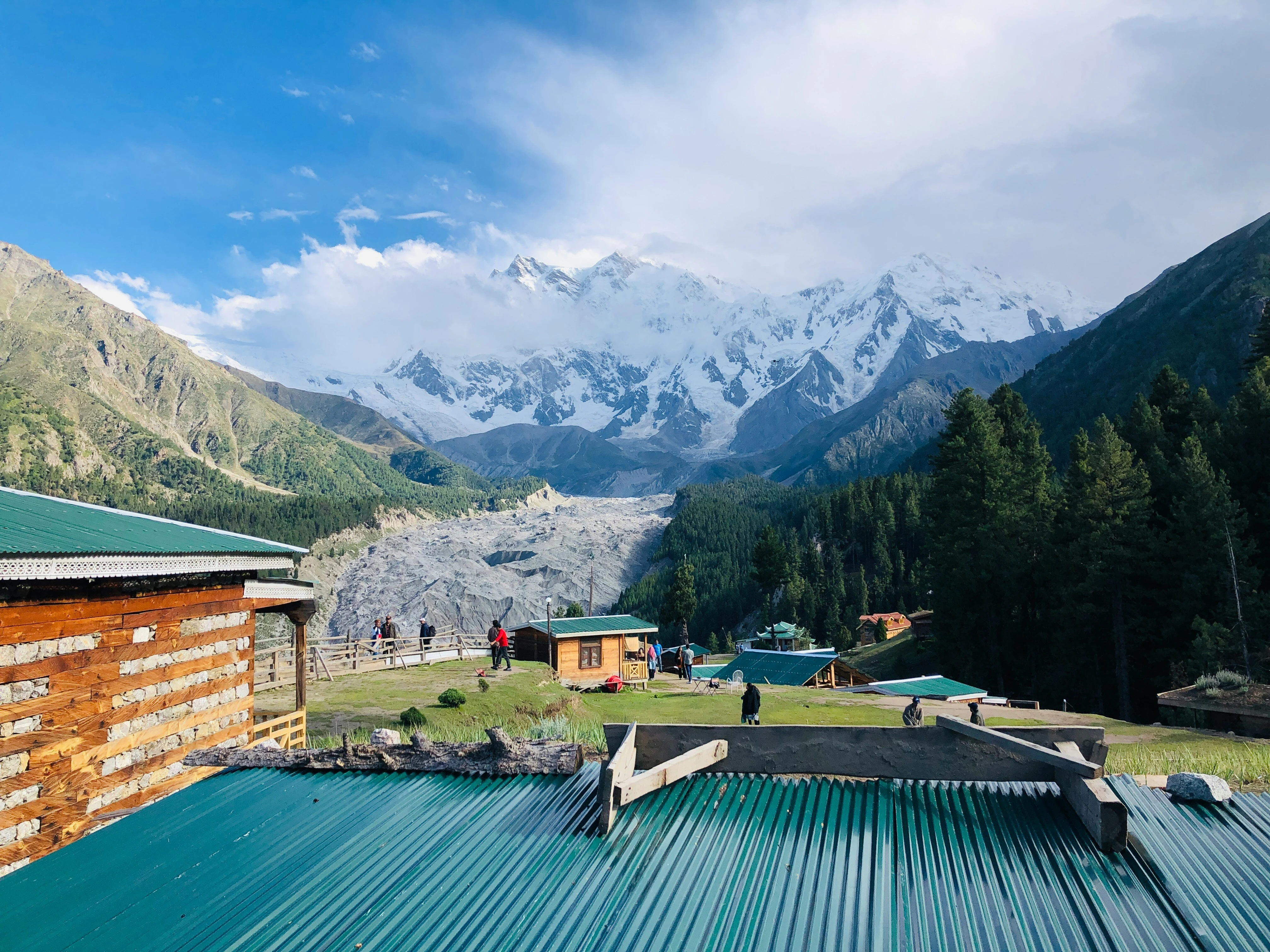
The trail eventually opens up as you emerge from the pine forest. Soon after, the enormity of Nanga Parbat starts to come into view. The meadow doesn't announce itself dramatically — it arrives gradually as the trees thin, the gradient softens, and the first wooden huts of the guesthouses come into sight. Most people describe the final fifteen to twenty minutes as the most photogenic stretch of the entire trail: open meadow underfoot, pine slopes on either side, and Nanga Parbat's north face rising straight ahead.
How Long Does the Trek Take?
The honest answer is a range: most people complete the hike in 2–3 hours,
depending on fitness level and pace. Those figures come up consistently across
multiple recent accounts from trekkers of varying experience levels. Our own experience guiding
clients on this trail broadly confirms 2 to 3 hours for fit, reasonably acclimatised hikers; 3
to 4 hours for those coming straight from lower altitudes or carrying heavier loads.
A few specific factors push you toward the slower end: carrying your own pack rather than hiring
a porter (recommended to avoid), skipping acclimatisation in Gilgit or Chilas beforehand,
attempting the trail in peak summer heat rather than early morning, and — honestly — stopping
often for photos, which most people do and absolutely should.
Guide vs. Solo: What's Sensible for Foreign Visitors
If you're an experienced hiker and confident navigating mountain paths, going
solo is totally doable — but always inform someone locally about your trek schedule and
expected return. The trail is well-trodden during the season and clear enough that
navigation isn't the concern it might be on a remote high-altitude route.
That said, beginners or solo travelers may benefit from hiring a local guide. Guides not
only ensure safety but also enrich your experience with local knowledge and cultural
stories. For foreign visitors in particular, a guide also helps navigate the
horse-hire negotiations at Tattu and provides a local contact if anything goes sideways on the
trail. Horse rentals are available at Tattu Village for around PKR
2,000–3,000 if you'd prefer not to walk, or for carrying luggage while you hike.
For context on costs, logistics, and whether hiring a guide makes sense given your overall
itinerary, see our Fairy
Meadows complete guide.
What to Bring for the Tattu to Fairy Meadows Trek
- The trail is short enough that you don't need expedition-level gear, but a few things make a
real difference:
- Water:Carry more than you think you'll need from Tattu; the springs on trail can supplement but aren't reliable enough to plan around exclusively
- Layers:Temperature drops significantly once you're above the treeline and the meadow sits at 3,300 m — even a July afternoon can turn cold quickly
- Trekking poles:Not essential, but noticeably helpful on the loose sandy section in phase one and on the descent back down
- Day pack only: If you're staying at the meadow, send your main bag up on a porter or horse rather than carrying it — the weight difference matters at altitude Snacks and cash: The tea stalls on trail are simple; carry your own energy food and small rupee notes There are no hospitals or formal clinics in Fairy Meadows. In case of emergencies, you'll need to descend to Tattu Village and then travel to Chilas or Gilgit. Carry a basic first aid kit and any personal medications.
Best Time to Do the Trek
The best time to trek to Fairy Meadows is from mid-May to early October.
During this window, the trails are snow-free, the weather is more predictable, and the
meadows come alive with lush greenery.
Within that window, timing within the day
also matters: an early start from Tattu — by 7 or 8 am — gets you onto the trail before the heat
builds in the exposed lower section, gives you the best morning light on Nanga Parbat when you
arrive, and avoids the peak-hours crowds that tend to hit the meadow around midday during the
busiest weeks. April–May and September–October can also offer the best
experience — less crowded than peak summer, with better chances of having sections of the
trail to yourself.
For a full breakdown of seasonal timing, the jeep track from Raikot Bridge, and what to do once
you're at the meadow — including the onward hike toward Nanga Parbat Base Camp — read our complete Fairy Meadows
guide.
Frequently Asked Questions
The trail is approximately 5 to 5.5 km (around 3.4 miles) from Tattu Village to Fairy Meadows, with an elevation gain of roughly 600–700 metres from about 2,600 m at the trailhead to 3,300 m at the meadow.
Most reasonably fit hikers complete it in 2 to 3 hours. Hikers who are less acclimatised, carrying heavy bags, or taking regular rest stops should plan for 3 to 4 hours. An early-morning start is worth it both for cooler temperatures and better mountain light on arrival.
It's graded moderate — the terrain itself is not technical, but the consistent uphill gradient and altitude gain (you're climbing from 2,600 m to 3,300 m) make it feel harder than the distance alone suggests. The biggest variable is acclimatisation: spending a night at Chilas or Gilgit before attempting the trek makes a noticeable difference.
Yes — the trail is well-marked and well-travelled during the season, and experienced hikers regularly do it solo. That said, foreign visitors benefit from having a local contact for logistics at Tattu (horse hire, porter negotiations) and a named person to inform of their schedule. Guides are available at Tattu Village and are worth considering for first-timers.
Yes. Horses are available for hire at Tattu Village for around PKR 2,000–3,000 for the trip up. They're used both for carrying luggage and as a riding option for those who prefer not to walk, or need to avoid the physical exertion.